http://link.springer.com/article/10.1007%2Fs10709-005-4267-1
Genetica
September 2005, Volume 125, Issue 1, pp 33-41
Karyotype Differentiation in Chromaphyosemion Killifishes (Cyprinodontiformes, Nothobranchiidae). I: Chromosome Banding Patterns of C. Alpha, C. Kouamense and C. Lugens
Martin Völker, Petr Ráb, Harald Kullmann
Abstract
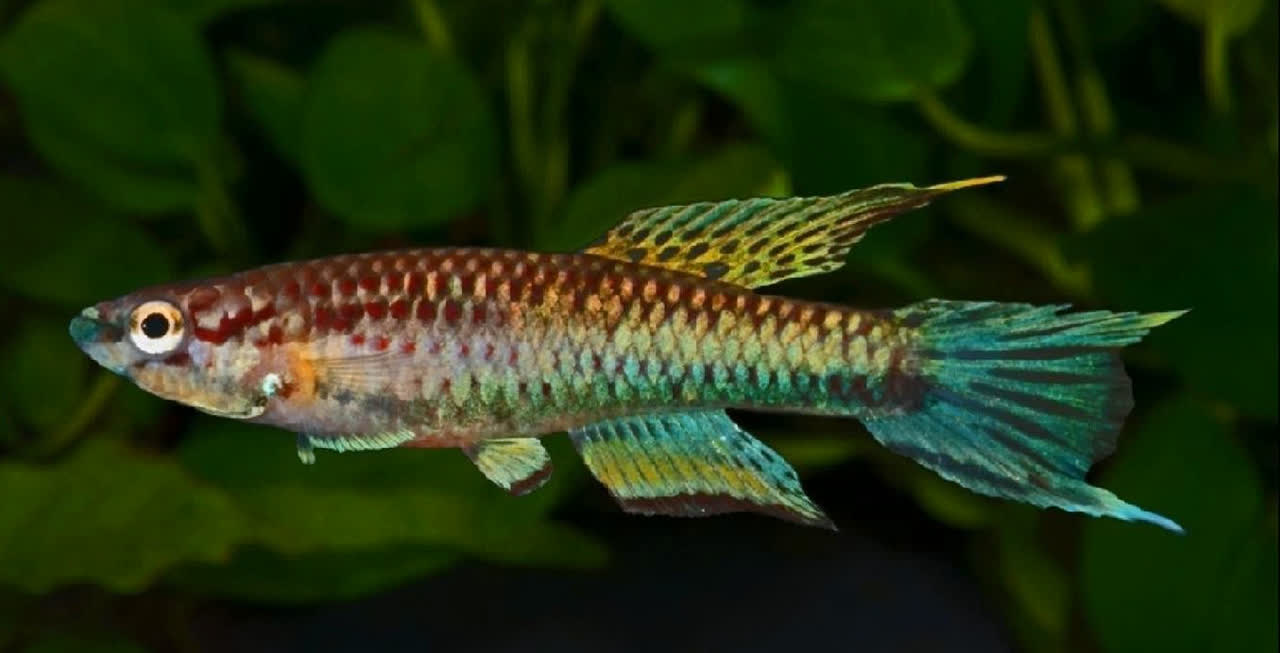
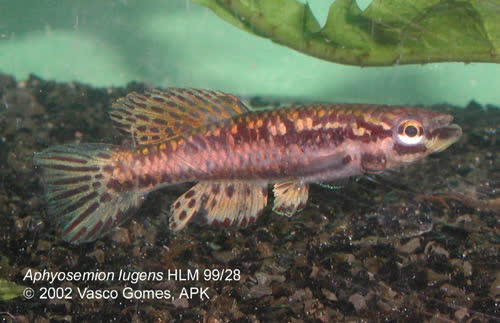
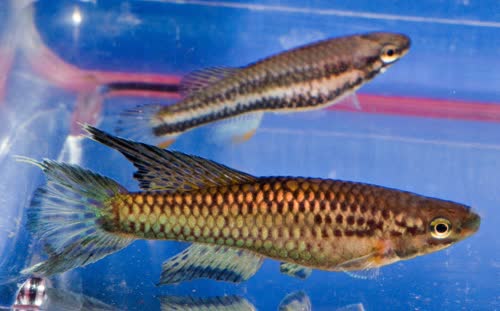
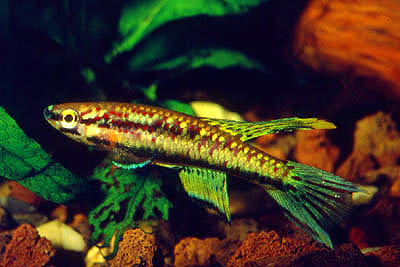
The karyotypes of three recently described species of Chromaphyosemion, namely C. lugens, C. alpha and C. kouamense, were analysed using conventional Giemsa staining, C-banding and sequential banding (fluorescence banding with 4′, 6-diamidino-2-phenylindole (DAPI) and Chromomycin A3 (CMA3), C-banding, AgNO3-staining). Diploid chromosome numbers ranged from 2n = 36 in C. lugens to 2n = 38 in C. alpha and C. kouamense. The karyotype of C. lugens consisted of one pair of metacentric (m) and 17 pairs of telocentric (t) chromosomes, that of C. alpha was composed of one pair of submetacentric (sm), six pairs of subtelocentric (st) and 12 pairs of t chromosomes, and that of C. kouamense comprised five pairs of st and 14 pairs of t chromosomes. In addition to the differences in karyotype structures and/or chromosome numbers, the karyotypes of the examined species differed with respect to NOR phenotype and distribution and base composition of heterochromatin. No heteromorphic sex chromosomes were detected in any of the species. Our findings provide cytotaxonomic evidence for the species distinctness of C. alpha, C. kouamense and C. lugens whose descriptions were based primarily on external morphology.